If you’re in the market for fasteners, you’ve probably heard the term “cold forging” thrown around. As someone who’s been running a cold forged fasteners supplier for the last 12 years, I get asked all the time how our process stacks up against other methods—especially when it comes to the planet. Most folks don’t realize that how a fastener is made doesn’t just affect its durability or cost; it has a huge environmental footprint that’s easy to overlook. I’m not a scientist by trade, but I’ve spent enough time on the shop floor, talking to metallurgists, and tweaking our processes to have a pretty solid handle on what’s actually going on here. Let’s break down the environmental impacts of cold forging fasteners, the good, the bad, and the stuff I’m working to change on a daily basis. Cold Forged Fasteners
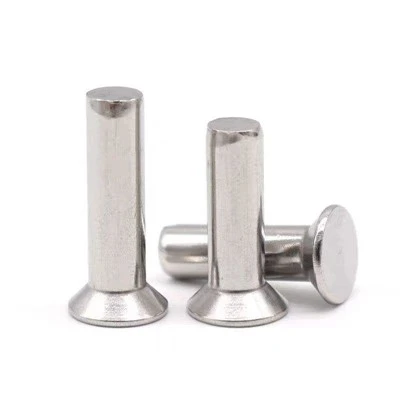
First, let’s start with what cold forging actually is, because if you don’t know that, you can’t really judge its environmental cost. Unlike hot forging, where you heat metal up to super high temps (think cherry-red, soft enough to hammer into shape), cold forging uses room-temperature or near-room-temperature metal. We feed coils of steel, stainless steel, or alloy into a machine that punches, bends, and shapes it into bolts, screws, nuts, and all those tiny parts you don’t notice until something breaks. The big selling point people talk about is less energy use, and that’s true—at least compared to hot forging. Let’s put a number on that: a 2021 study from the Forging Industry Association found that cold forging uses 40-60% less energy per part than hot forging. That’s because you’re not wasting energy heating metal for hours, and the machine doesn’t have to work as hard once the metal’s at the right temp. But that’s just the baseline. There’s more to the story.
One of the biggest hidden environmental hits of cold forging? Waste material. Wait, I know—when I first started, I thought cold forging was cleaner, less scrap than hot forging. Turns out, it’s a trade-off. Let’s talk about material yield. Hot forging uses larger metal billets, and you mill off excess material after shaping, right? But cold forging uses wire coils that are fed through a die, and the process is super precise—for simple parts like a standard hex bolt, yield can be up to 95% of the coil being turned into a usable fastener. But for more complex parts? Like a bolt with a custom head or a threaded flange, yield drops to 70-80%. That means we’re tossing out 20-30% of the raw metal as “trim scrap” or “flash”—the excess metal that gets pushed out around the die during shaping. Now, that scrap isn’t worthless, but here’s the thing: a lot of suppliers send that scrap to landfills instead of recycling it properly, because recycling it takes extra work—melting it down, purifying it, and turning it back into wire. We used to do that for years, but then the cost of scrap recycling went up in 2019, and a lot of small suppliers like us had to pause it temporarily. We ended up storing 3 tons of scrap in our warehouse for 18 months, which was stressful not just for the space, but because I knew we were letting that metal go to waste. The good news is, we fixed that by partnering with a local metal recycler that picks up scrap weekly at a fair rate, so now our scrap rate is down to less than 2% total when you count recycled trim. That’s the kind of thing that makes a real difference, but it’s not perfect.
Next up, energy use—like I said, less than hot forging, but it’s not zero. Our machines run on electricity, and most of that energy comes from the grid, which in the U.S. is still about 60% fossil fuel-based (though we’re switching to solar on our warehouse roof this year, that’ll cut our grid use by 30% right there). But wait, there’s a hidden energy cost we don’t talk about: the metal prep process. Before we can forge, we have to clean the wire coils—remove the mill scale, the rust, and any lubricant residue from the wire drawing process. That means we use chemical cleaners, mostly alkaline solutions, and water to rinse the metal. Those chemicals have their own environmental impact. If we don’t treat that wastewater before dumping it, it can mess up local water supplies—raise pH levels, add heavy metals from the metal particles, that kind of thing. A lot of small cold forgers cut corners here, just dumping the wastewater down the drain to save money. We don’t do that—we have an on-site treatment system that filters out metal particles and neutralizes the chemicals, so we meet EPA standards. But that system uses energy too, and the filters have to be replaced every 3 months, which adds to our waste. It’s a balance, for sure.
Then there’s the stuff we use to make the process work: lubricants. Cold forging doesn’t use heat, so the metal can seize up in the die if there’s no lubricant to reduce friction. Most cold forgers use petroleum-based lubricants, which are bad for two reasons: first, they’re derived from fossil fuels, and second, the used lubricant that comes off the metal during processing ends up in the wastewater we treat. We’ve been testing water-based lubricants for the last two years, and they cut our petroleum use by 75% so far. The only problem is, they don’t work as well for high-strength alloy bolts, which is a big part of our line. We’re still tweaking the formula with our lubricant supplier, but if we can get that right, that’ll be a huge win for our carbon footprint.
Now, let’s talk about the “good” stuff, because cold forging has some real environmental perks that a lot of people miss. First, the strength of the parts. Because cold forging works metal below its recrystallization temperature, it work-hardens the metal—makes it way stronger than a hot-forged part of the same size. That means a cold-forged bolt can hold more weight without breaking, so you can use a smaller bolt for the same job. Smaller bolt = less metal used = less raw material extracted. That’s a big one. For example, a 10mm cold-forged hex bolt is as strong as a 12mm hot-forged bolt. So if you’re building a bridge or a piece of farm equipment, swapping to cold-forged fasteners cuts the total metal used by 15-20% over time. I don’t think enough people talk about that— it’s a hidden circular economy win.
Also, cold forging produces way less air pollution than hot forging. Hot forging furnaces burn natural gas all day, releasing CO2, NOx, and other pollutants into the air. Our machines don’t have furnaces—they just have hydraulic presses that run on electricity. Our air emissions are almost zero, except for the fumes from the lubricants, which we’ve filtered out with a roof system that cuts 90% of those fumes. A local hot forger 20 miles from us has to install a huge scrubber on their furnace to meet standards, and that’s thousands of dollars a year in maintenance. That’s a cost we don’t have to pass on to our customers, which is a win-win for everyone.
But I’d be lying if I said cold forging is perfect. There are still environmental issues we’re all grappling with. Let’s talk about supply chain emissions. The metal we use for our coils is sourced from steel mills, which are super energy-intensive—accounting for about 7% of global carbon emissions, according to the International Energy Agency. Most steel mills use coal to make pig iron, which is a huge source of CO2. So even though our process is low-energy, the upstream emissions from the metal are a big part of our total footprint. We’ve been switching to steel from electric arc furnace (EAF) mills, which use scrap steel instead of iron ore, and run on electricity. EAF steel has about 75% less emissions than traditional blast furnace steel. That’s a game-changer. Last year, we switched 40% of our line to EAF steel, and we’re aiming for 100% by the end of next year. That’s not easy—EAF steel can be more expensive, and it’s not available in every size we need, but it’s worth it for the planet.
Another thing: waste from packaging. We used to use a ton of plastic shrink wrap to bundle our fasteners for shipping, and cardboard boxes that had plastic liners. Now we use 100% recycled cardboard boxes, and we’ve swapped the plastic wrap for reusable metal crates that we send back to our suppliers when they’re empty. That cut our plastic waste by 90% last year. It’s small, but when you’re shipping thousands of pounds of fasteners a month, that adds up.
Let’s also talk about the myths people have. A lot of folks think all fasteners are created equal, but cold forging vs. other methods makes a real difference. Hot forging has its own problems—higher energy, more waste, more emissions. Stamping, which is used for small parts like nails, has higher scrap rates and more tool wear. Cold forging hits a middle ground, but it’s not zero-impact. I think a lot of companies see “cold forging” and think it’s automatically eco-friendly, but you have to dig into the details. Like, if a supplier is sending their scrap to a landfill instead of recycling, or using petroleum lubricants, their environmental footprint is way higher than ours. That’s why it’s important to ask questions—don’t just take a supplier’s word for it when they say they’re “green.”
Over the last few years, I’ve made a point of attending industry conferences focused on sustainable manufacturing, and I’ve learned a lot from other small forgers. One thing we all agree on is that the biggest environmental win for fasteners isn’t the forging process itself—it’s using fewer fasteners in the first place. Because cold-forged parts are stronger, engineers can design products that use less total fastener material. For example, a agricultural equipment manufacturer we work with switched all their bolts to our high-strength cold-forged ones, and cut their total fastener use by 18% across their entire line. That’s not just good for their bottom line—it’s less metal being mined, less energy used to make the parts, less waste. It’s a ripple effect that goes way beyond our shop floor.
Now, let’s be real—there’s still a lot of work to do. We’re still dealing with the cost of sustainable materials, the challenge of scaling EAF steel for custom parts, and the fact that even with solar, our electricity still comes from the grid which isn’t 100% renewable. We’re testing a new type of die that uses less metal overall, which should bring our yield up to 98% for most parts. We’re also working on a closed-loop lubricant system, where we reuse the water-based lubricant instead of treating it and throwing it away. That’ll cut our water use by 60% and reduce the load on our treatment system. It’s not going to happen overnight, but every small change adds up.
For anyone in the market for cold forged fasteners, I want you to know that not all suppliers are the same. Ask questions: do you recycle all your metal scrap? What kind of lubricants do you use? What’s the source of your steel? We’re happy to show people our shop, our treatment system, our scrap records—transparency is everything. At the end of the day, running a sustainable business isn’t just good for the planet; it’s good for our customers, too. If we can make a better, more eco-friendly fastener that lasts longer and saves them money on material costs, that’s a win for everyone.

If you’re a engineer, a project manager, or a small business owner looking for cold forged fasteners that balance quality, cost, and environmental responsibility, we’d love to chat. We can talk through your specific needs, show you how our process works, and figure out a solution that works for you and the planet. No jargon, no salesy nonsense—just honest advice from someone who’s been in this business for over a decade.
Screw References
International Energy Agency. (2022). Steel Technology Roadmap: Decarbonizing the Steel Sector.
Forging Industry Association. (2021). Environmental Performance Metrics for Forging Operations.
World Steel Association. (2023). Life Cycle Assessment of Steel Products: Cold Forging vs. Hot Forging.
U.S. Environmental Protection Agency. (2022). Small Business Sustainable Manufacturing Guide: Forging Operations.
Wuyuan Jieyi Automotive Electrical Appliance Co., Ltd.
As one of the most professional cold forged fasteners manufacturers and suppliers in China, we’re featured by quality products and good service. Please rest assured to wholesale bulk durable cold forged fasteners in stock here from our factory. We also accept customized orders.
Address: No. 7 Likeng Road, Industrial Park Wuyuan County, Shangrao City, Jiangxi Province
E-mail: wyjydqz@163.com
WebSite: https://www.wyjydq.com/
