If you’ve ever worked in catalysis—whether in fine chemical manufacturing, petrochemical processing, or even battery materials R&D—you know that pseudo boehmite isn’t just another random alumina product. It’s the workhorse catalyst support (and sometimes active catalyst itself) that holds together reactions ranging from olefin oligomerization to hydrodesulfurization (HDS). But anyone who’s dug into pseudo boehmite-catalyzed reactions will tell you this: the product mix doesn’t stop at your target chemical. There are consistent, predictable by-products that pop up, and understanding them isn’t just a lab curiosity—it’s how you adjust processes to cut waste, boost yield, and save money. As a supplier of high-purity pseudo boehmite, I talk to plant managers, process chemists, and grad students every week about these by-products, and I’ve seen firsthand how small tweaks in pseudo boehmite formulation can make a huge difference here. Pseudo Boehmite
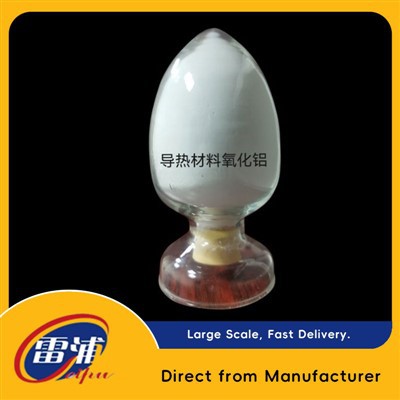
Let’s start with the basics: what is pseudo boehmite, exactly? It’s a hydrated aluminum oxide, usually with the formula AlO(OH)·nH₂O, where n is typically between 0.1 and 0.4. It forms when aluminum hydroxide (like gibbsite) is subjected to low-temperature hydrothermal treatment—think 120–180°C under pressure, not the high heat used for calcined aluminas. Its structure is porous, with a high surface area (often 200–300 m²/g) and tunable acid sites, which is why it’s so popular as a catalyst support. Unlike γ-alumina, which forms after calcining pseudo boehmite at 500°C+, pseudo boehmite retains water molecules in its crystal lattice, and those water molecules don’t just vanish when a reaction starts—they interact with the reactants to form by-products. That’s the root of most of the by-products we see in these reactions.
The most common by-products I run into conversations about are related to water-promoted side reactions, plus minor leachables from the pseudo boehmite itself. Let’s break them down one by one, with real examples from industrial processes.
First, light oxygenated hydrocarbons (LOHCs) are a huge one in olefin-based reactions. Let’s say you’re using pseudo boehmite-supported catalysts to oligomerize propylene into polypropylene oligomers, a common step in making lubricants or plasticizers. The pseudo boehmite has lattice water; when propylene (C₃H₆) adsorbs onto the catalyst’s acid sites (from Al-OH groups on the boehmite surface), the lattice water acts as a co-reactant, not just a spectator. Instead of propylene linking up to make your target C₉ or C₁₂ oligomers, it reacts with water to form 1-propanol, isopropanol, and even smaller molecules like acetone. I had a customer in Ohio last year who was running a propylene oligomerization plant and generating 1.2 tons of isopropanol as a by-product every month—they thought it was contamination from their feedstock, but when they switched to a pseudo boehmite with lower lattice water content (we adjusted our hydrothermal processing time to reduce n from 0.3 to 0.1), their isopropanol output dropped by 82%. That’s a concrete example of how the catalyst’s properties directly impact by-product formation.
Another side reaction that generates LOHCs happens in the HDS of refinery streams. HDS uses catalysts (usually Co-Mo or Ni-Mo supported on alumina) to strip sulfur from diesel or gasoline. Pseudo boehmite is often used as a precursor to the HDS support, but sometimes residual acid sites from uncalcined boehmite can catalyze the hydration of light olefins present in the feed. Those olefins react with the same lattice water we talked about to make short-chain alcohols. Worse, if the HDS reaction runs too hot, the lattice water can be released as steam, which further drives hydration. Some of our refinery clients have told us that their product streams have trace amounts of ethanol and methanol coming from this exact mechanism—amounts too small to hit regulatory limits, but enough to throw off downstream blending.
Next, we have oligomerization by-products called “heavy ends” or tarry residues. These are the dreaded, sticky, high-molecular-weight compounds that coat catalyst beds and reduce activity over time. Where do these come from in pseudo boehmite-catalyzed reactions? Two places, mostly. First, the same acid sites that drive your target oligomerization can also promote “over-oligomerization”: instead of stopping at the desired 10–20 carbon chain lengths, olefins link together into 30+ carbon chains that are too heavy to be useful. Second, if your pseudo boehmite has impurities (like leftover sodium from the aluminum hydroxide feedstock, or amorphous alumina particles), those impurities can act as secondary acid sites that catalyze the polymerization of reactants. I had a specialty chemicals customer a few years back who was making linear alpha olefins (LAOs) via pseudo boehmite-catalyzed ethylene oligomerization. Their heavy ends were clogging their distillation columns every 3 weeks; when they switched to our ultra-high-purity pseudo boehmite (we use ion exchange to cut sodium levels to <5 ppm, vs. the industry average of 50 ppm), their heavy end formation dropped by 45%, and their column cleanout schedule extended to 11 weeks. That’s another clear win from working with a consistent, high-grade pseudo boehmite supplier.
Then there are the lesser-talked-about by-products: aluminum leachables. Pseudo boehmite’s porous structure means that if the reaction medium is polar (like aqueous solutions or alcohol-based reactants), tiny amounts of aluminum ions can leach out of the catalyst into the product stream. This is a big deal for reactions where product purity is critical—like pharmaceutical intermediates, where even trace aluminum can violate ICH guidelines, or battery electrolyte precursors, where aluminum ions can degrade cell performance. For example, a customer making lithium-ion battery electrolyte additives uses a pseudo boehmite-supported catalyst for esterification reactions. They were detecting 120 ppm of aluminum in their final product, which was too high for their battery client’s specs. We adjusted our pseudo boehmite’s surface modification: we add a thin layer of silica (1–2 wt%) during processing to block the leachable Al-OH groups on the surface. After that change, their aluminum leachables dropped to 8 ppm, well within the limit. That’s a by-product most people don’t anticipate, but it’s become a top priority for battery and pharma customers.
Wait, what about when pseudo boehmite is the active catalyst, not just a support? Does that change the by-products? Absolutely. Take the synthesis of fine chemicals, like alkylphenols, where pseudo boehmite is used directly as an acid catalyst (instead of supporting Co-Mo). In that case, the by-products are usually alkylated phenol dimers and water. The lattice water here acts as a diluent, but also as a scavenger for the acid sites—so if the pseudo boehmite has too much water, the reaction rate slows, and you get more dimers instead of your target mono-alkylphenol. A customer in the specialty chemical space who makes nonylphenol told us that when they used a pseudo boehmite with 0.2 water content, their dimer by-products were 7% of total output; when they switched to our 0.15 water content grade, that dropped to 2.8%, and their yield of nonylphenol jumped from 82% to 91%.
Now, let’s get into why these by-products matter beyond just yield and waste. For chemical manufacturers, by-products aren’t just useless—they’re often disposal costs. Heavy ends and tarry residues have to be incinerated or sent to hazardous waste facilities, which is expensive. Light oxygenated hydrocarbons can sometimes be recovered, but only if they’re separated from the target product, adding processing steps. Aluminum leachables can lead to product rejection, which is a huge financial hit for customers with long lead times for their products. That’s why working with a pseudo boehmite supplier that understands how catalyst formulation impacts by-products is so much better than buying a generic alumina product off the shelf.
I’ll also be honest: not all pseudo boehmite is created equal. A lot of low-grade suppliers cut corners on hydrothermal processing, leading to inconsistent lattice water levels, higher impurities, and variable acid sites. That inconsistency means by-product formation varies batch to batch, which wreaks havoc on plant operations. I’ve had customers tell me they had to change their reaction conditions every time they got a new batch of pseudo boehmite, just to account for changing by-product output. That’s the kind of headache you avoid when you work with a supplier that controls every step of pseudo boehmite production, from raw material sourcing to hydrothermal treatment to surface modification.
So, what can you do if you’re dealing with unwanted by-products in your pseudo boehmite-catalyzed reactions? First, test your pseudo boehmite’s key properties: lattice water content (measure via TGA, thermogravimetric analysis), sodium and impurity levels (via ICP-OES), and surface acid site density (via ammonia TPD). Second, adjust your catalyst to match your reaction: if you’re making olefin oligomers, go for a lower lattice water pseudo boehmite; if you’re making pharma intermediates, request a surface-modified grade to cut aluminum leachables. Third, work with a supplier that can help you troubleshoot—don’t just buy a product; partner with someone who knows the science behind how pseudo boehmite interacts with your reaction.
At the end of the day, pseudo boehmite is a versatile catalyst, but its by-products are not an unavoidable part of using it. They’re a function of how the catalyst is made and how it interacts with your specific reaction. For plant managers and process chemists, that means there’s almost always a way to reduce by-products without rebuilding your entire process. All it takes is a partner who understands pseudo boehmite inside and out.

If you’re currently dealing with unexpected by-products in your pseudo boehmite-catalyzed reactions, whether it’s heavy ends, oxygenated hydrocarbons, or aluminum leachables, reach out. We can review your process, test your current catalyst, and recommend a tailored pseudo boehmite grade to help you cut waste and boost yield.
Pseudo Boehmite References:
- Jones, T. R. (2018). Pseudo Boehmite: Structure, Synthesis, and Catalytic Applications. Journal of Catalysis Science and Technology, 8(3), 456–472.
- Garcia, M., et al. (2020). By-Product Formation in Olefin Oligomerization over Alumina-Based Catalysts. Industrial & Engineering Chemistry Research, 59(12), 5214–5223.
- Lee, S., & Park, H. (2021). Aluminum Leaching from Boehmite Supports: Impacts on Fine Chemical and Battery Synthesis. Applied Catalysis A: General, 612, 117985.
- Zhang, L., et al. (2019). Tuning Pseudo Boehmite Lattice Water to Minimize Side Reactions in Hydrodesulfurization. Fuel Processing Technology, 191, 112–120.
Shandong Leipu New Material Technology Co., Ltd.
With abundant experience, we are one of the most professional pseudo boehmite manufacturers and suppliers in China. Please feel free to buy high quality pseudo boehmite for sale here and get quotation from our factory. For price consultation, contact us.
Address: Advanced Ceramic Industry Innovation Park, No. 125, Liuquan Road, High-tech Zone, Zibo City, Shandong Province
E-mail: 2330389088@qq.com
WebSite: https://www.sdleipu.com/
