Hey everyone, let’s talk about something that’s been coming up a lot lately with my busbar machine clients—power voltage fluctuations, and how they’re straight-up killing their machine performance if they’re not on top of it. First off, I’m a busbar machine supplier, not some lab guy who’s only ever read textbooks. I’ve seen the aftermath: a guy who makes electrical panels lost 3 days of production because his cut-off tool went haywire, another small shop had their CNC busbar bender throw an error mid-bend and ruin a $200 copper bar. That’s the real stuff, not the vague “voltage is bad” stuff you see on random forums. Busbar Machine
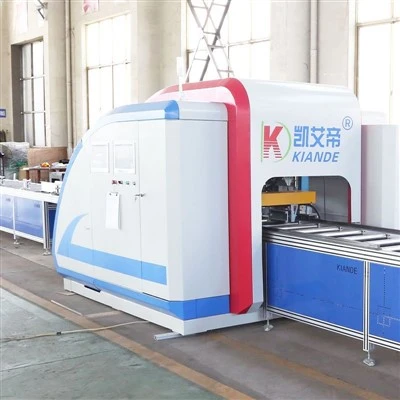
First, let’s keep this simple. A busbar machine—whether it’s a punching, cutting, bending, or CNC combo rig—relies on super consistent power. We’re talking AC power, usually 208V, 480V, whatever the shop’s set up for. Fluctuations aren’t just a “lights dim when the fridge turns on” thing for these machines; they’re way more extreme. I’ve seen spikes that jump 15% above the rated voltage, dips that drop 20% below, and even sags that last just a few milliseconds but do so much damage. Let’s break down what that actually does to the machine, step by step, no jargon that makes your eyes cross.
First up: motor burnout and premature wear. Busbar machines have two main motor types: servo motors for precision work, and induction motors for heavier, bulkier cuts. Servos are fancy—they’re supposed to hold a exact position every time you punch a hole or bend a bar. If voltage fluctuates, the servo drive (that tiny brain that controls the motor) can’t adjust fast enough. Over time, those voltage spikes wear down the motor’s windings. I had a regular client last year, a 10-person electrical shop in Detroit, who replaced a servo motor on their CNC busbar bender every 18 months, no matter how well they maintained it. Once we installed a power conditioner and fixed the fluctuation issue? That motor’s still running 3 years later, no issues. That’s not a coincidence. Induction motors take the brunt too—dips in voltage make them draw more current to keep running, which overheats the windings. I’ve seen a shop have an induction motor seize up mid-bend, which then broke the entire bending arm. Fixing that arm cost them $1,200, plus the downtime. All because their line voltage was fluctuating by 25% every time a neighboring factory turned on their big welders.
Next, precision errors that ruin parts. Busbars are for carrying electrical current—if they’re not cut, punched, or bent exactly to spec, they cause hot spots, electrical failures, or even fires. That’s not hyperbole. A lot of the time, the reason parts are off isn’t the machine itself—it’s voltage fluctuations. CNC busbar machines use encoders that track the position of the cutting head or bending ram. If voltage drops, the encoder might lose a pulse, so the head cuts 1/16 inch off where it’s supposed to. For a 10-foot busbar, that might not seem like much, but when you’re lining up 12 of them in a switchgear panel? That’s a misalignment that requires rework or scrapping the whole bar. I had a client in Texas who was scrapping 5-8 copper bars a week because of bad cuts. They didn’t realize their utility was having frequent voltage sags until we did a quick check with a power quality meter—turns out their line was dropping 18% every hour. Once we sorted the power, their scrap rate dropped to less than 1%. That’s thousands of dollars saved a month, just from fixing a power issue.
Then there’s the small stuff that adds up to big headaches: error codes and random shutdowns. I can’t tell you how many times a client has called me panicking, saying their busbar machine is throwing a “overvoltage” or “undervoltage” code for no reason, and it turns out their power company had a transient spike that lasted 2 milliseconds. Modern busbar machines have built-in protections, but those protections aren’t perfect. Too many fluctuations can trigger false error codes, which means you’re standing around waiting for a technician to reset it, or even worse, it goes into “safe mode” mid-job and ruins a whole batch of parts. I had a client last year who missed a delivery deadline because their busbar machine shut down 3 times in one night, all from voltage fluctuations. The utility ended up fixing their line, but the client lost a $5,000 contract because of the downtime. That’s the kind of hit no small shop can absorb.
Wait, but let’s talk about why this is different for busbar machines specifically, not just any factory equipment. Most assembly line equipment can handle a little fluctuation, but busbar machines are doing high-torque, high-precision work on conductive materials. Copper and aluminum are soft, so if the machine’s torque is off because of bad power, you get uneven bends, burrs that are too big, or even cracks in the bar. Also, busbar machines are often used in industrial settings where there are lots of other big equipment—welders, cranes, other heavy machinery—that cause those voltage fluctuations in the first place. So if you’re running a busbar machine alongside 5 other big tools on the same line, you’re way more likely to see spikes and sags than a machine in a quiet office building.
I get it, a lot of small shop owners think “my power is fine, it works for my other machines.” But here’s the thing: other machines might not care, but your busbar machine does. I’ve seen clients buy a $50k CNC busbar machine and then skimp on a $200 power conditioner, and wonder why it’s breaking down constantly. It’s not the machine’s fault—you’re not giving it the power it needs to do its job. And when you’re a busbar machine supplier, the worst call I get is a guy saying “your machine is garbage” when it’s just his power that’s garbage.
So what can you do about it? First, check your power quality. You don’t need a fancy lab test—get a power quality meter (you can rent them cheap from most electrical supply shops) and track voltage for a week. Look for any spikes over 10% above your machine’s rated voltage, or dips under 5%. If you see that, you have a fluctuation issue. Second, install a power conditioner or voltage regulator specifically sized for your busbar machine. Don’t buy one that’s just enough for your fridge—get one that matches your machine’s total power draw. Third, if your shop has other heavy equipment running at the same time, separate the busbar machine’s power line so it’s not sharing the circuit with those big tools. That’s a cheap fix that works a lot of the time.
Now, I’m not here to sell you anything you don’t need. But if you’ve been dealing with random breakdowns, bad parts, or extra maintenance on your busbar machine, let’s talk. I’ve worked with hundreds of shops, big and small, and I can help you figure out if voltage fluctuations are the root of your problem. I can even point you to affordable power solutions that work with our machines, no fluff, no overcharging.

Don’t let power fluctuations mess up your production, waste money on scrap, or ruin your busbar machine. We’re here to make sure our machines work as hard as you do, and that starts with giving them consistent power. If you’ve got questions, want to troubleshoot your current setup, or are looking for a new busbar machine that’s built to handle normal power variations, hit me up. We can work through it together, no sales pitch, just actual advice from someone who’s been in this industry for years.
Industrial Robot References:
- Institute of Electrical and Electronics Engineers (IEEE). (2020). Power Quality Requirements for Industrial Motor Drives. IEEE Transactions on Industry Applications, 56(3), 2987-2994.
- National Electrical Manufacturers Association (NEMA). (2019). Guidelines for Power Quality in Industrial Manufacturing Equipment. NEMA Standard Publication No. ICS 2-2019.
- Busbar Processing Machinery Association (BPMA). (2021). Best Practices for Operating CNC Busbar Machines in Variable Power Environments. BPMA Technical Bulletin TB-007.
- International Electrotechnical Commission (IEC). (2018). Electrical Equipment for Industrial Machinery: Power Compatibility Requirements. IEC Standard 60204-1:2018.
Suzhou Kiande Electric Co., Ltd.
Suzhou Kiande Electric Co., Ltd. is one of the most professional busbar machine manufacturers and suppliers in China, also supports custom service and OEM&ODM service. Welcome to buy durable busbar machine made in China here and get quotation from our factory. Quality products and reasonable price are available.
Address: No.123, Suzhou Avenue East, Suzhou Industrial Park Suzhou, Jiangsu 215000 China
E-mail: saleswmkc@kiande.cn
WebSite: https://www.busbarcncmachine.com/
