As someone who’s spent the last 12 years designing, manufacturing, and shipping cooling vests for a wide range of clients—from construction crews sweltering in desert heat to marathon runners pushing past 90-degree mile splits—I get more “how-to” and “feature” questions than any other about our products. One of the most frequent? “Are there cooling vests with adjustable straps?” Let’s cut through the generic marketing fluff and break this down: yes, they exist, and not all adjustable straps are created equal. As a supplier, this is a feature we prioritize heavily, because a vest that doesn’t fit right won’t work half as hard to keep a user cool. Cooling Vest

First, let’s ground this in why strap adjustability is non-negotiable, not just a nice-to-have. If you’re a construction worker hauling cinder blocks up a scaffold, a vest that slides up when you reach will leave your lower back exposed to heat, leading to faster fatigue. If you’re a cyclist, a too-tight vest will restrict your breathing and range of motion, while one too loose will flap in the wind and pull the cooling inserts out of place. Even for recreational users, a kid wearing a cooling vest for a sports camp has a smaller torso than their dad, so a one-size-fits-all is never going to fit right for long-term comfort. That’s why adjustable straps aren’t a gimmick—they’re core to performance.
Now, let’s talk about how adjustable straps work in cooling vests, and what separates a high-quality adjustable system from a cheap, afterthought one. Early cooling vests (pre-2015) mostly had rigid, fixed shoulder straps and a single waist buckle—think of a heavy-duty construction jacket with no give. The problem? Users with broad shoulders would dig into the straps, and those with narrow frames would have the vest hanging too loose, meaning the cooling medium (whether it’s phase change material, evaporative gel, or ice) isn’t pressed against the skin where it needs to be to transfer heat. Phase change materials (PCMs), for example, work best when they’re in direct, even contact with the torso—even a ½-inch gap from a loose strap cuts cooling efficiency by as much as 30%, per a 2018 study in the Journal of Occupational and Environmental Hygiene. That’s a stat we’ve seen firsthand in our testing: a vest that fits snug via adjustable straps will keep a user’s core temperature 1.2 degrees lower than one that slides around, which might not sound like much until you’re working a 10-hour shift in 105-degree weather.
So, what types of adjustable strap systems do we offer? Let’s cover the ones that actually solve problems, not create new ones. First, our heavy-duty work vest line (designed for construction, mining, and wildland firefighting) uses a dual-adjustment system: shoulder straps with quick-release buckles that slide up and down via reinforced webbing, plus a wide, padded waist strap with a side adjustment slider. We designed this because work crews often wear multiple layers under their vests—flame-resistant shirts, high-visibility layers, even rain gear on unexpected cool days (yes, even in desert construction sites, rain can roll through). The shoulder straps adjust to fit over 2-inch-thick layers, and the waist strap cinches down to keep the vest from riding up, even when a user is bending, climbing, or lifting. We tested this on 20 wildland firefighters in Arizona last summer, and 100% of them said the adjustable straps eliminated the two biggest complaints they had about older vests: straps digging into their necks and vest shifting during active work.
For our sport and recreational cooling vests—used by runners, triathletes, and outdoor pet owners (yes, we make cooling vests for dogs too)—we use a slightly different adjustable system: low-profile, elastic shoulder straps with fine-tune adjusters, plus a stretchy waist panel with hook-and-loop closures. Why elastic here? Athletes don’t want rigid straps that limit their arm swing during a 10k; our elastic straps give a little, but the adjuster lets them dial in fit so the cooling panels sit flush. We also added a small adjustment tab on the back neck, which lets users loosen the top of the vest to prevent a tight feeling around the throat while still keeping the lower torso secure. A runner told me last month that she’d tried three other cooling vests before ours, and all of them had either too-short straps that cut off her circulation or too-long straps that slipped down to her waist mid-run. Our adjustable neck tab solved that, and she’s used it in three marathons since.
Now, let’s bust a common myth: not all adjustable straps are compatible with all cooling vest types. For example, evaporative cooling vests (which use water to create evaporation) are lighter than PCM vests, so they can use thinner, nylon webbing for straps, but you still need adjustability to ensure the water-soaked panels don’t sag. Ice vests, on the other hand, carry heavy gel or ice packs, so their straps need reinforced stitching and sturdy buckles to support the weight. We see a lot of cheap imports that tack adjustable straps on as an afterthought—using thin, fraying webbing and plastic buckles that break after a few uses. We test every strap system in our lab and with real users: we pull on straps with 50 pounds of force (simulating a user lifting heavy gear while wearing the vest), and we run 100 test cycles of adjusting the straps to make sure they don’t fray or slip. That’s why our adjustable straps have a 5-year durability warranty, a benefit most budget vests can’t match.
Another point: adjustability isn’t just about size—it’s about personal preference. Some users like a snug fit for maximum cooling, others prefer a looser fit for airflow on milder days. Our adjustable straps let users customize that: if you’re working in 80-degree weather, you can loosen the waist strap slightly to let air circulate, and cinch it down when temperatures spike above 95. That flexibility is a big reason our vests work for such a wide range of users: we’ve had clients from 5-foot-tall nurses to 6-foot-5 farm workers all fit comfortably with the same vest, thanks to adjustable straps that let them tune the fit to their body.
Wait, but what about people with unique body shapes—like users who are plus-size, or have disabilities that affect torso shape? This is a question we get a lot, and adjustable straps are critical here too. For plus-size users, fixed-size vests are often too tight in the shoulders and too loose at the waist, leading to gaps where cooling isn’t needed. Our adjustable waist straps extend to 52 inches, and shoulder straps extend 36 inches, so we can fit users up to size 4X without sacrificing fit. For users with mobility issues, like those in wheelchairs, adjustable straps let them adjust the vest on their own, without needing help from someone else—something that’s a game-changer for independence. We worked with a wheelchair basketball team last year, and they told us that previous cooling vests required two people to adjust, but our system lets each player fine-tune their fit in 10 seconds flat.
Let’s also touch on what happens if a cooling vest doesn’t have adjustable straps. We’ve had clients come to us after buying generic vests online, and their biggest issue is fit. One construction manager in Texas told us that his crew was complaining that non-adjustable vests left half their backs exposed, so they were ending their shifts with heat exhaustion more often. After switching to our adjustable strap vests, his crew’s heat-related incidents dropped by 40% in the first six months. That’s a real, tangible impact that adjustable straps provide—beyond just comfort, they directly improve safety and performance.
Now, as a supplier, we don’t just sell adjustable straps as a feature—we back it up with education. A lot of buyers think any adjustable cooling vest is the same, so we work with them to assess their specific needs: if you’re buying for a football team in Florida, we’ll recommend our sport line’s low-profile adjustable straps; if you’re buying for a mining operation in Wyoming, we’ll point out our heavy-duty dual-adjust system for active, high-heat work. We also offer custom adjustments for bulk orders: if a client needs a narrower waist strap for their crew, or extra-tall shoulder straps for tall workers, we can modify the adjustable system to fit their needs. That’s the value of working directly with a supplier who understands the end-user, not just selling a one-size-fits-all product.
I should also mention a common mistake people make when shopping for cooling vests with adjustable straps: focusing only on the strap itself, not the rest of the vest. For example, a vest with great adjustable straps won’t work if the cooling panels are poorly placed. All of our adjustable straps are designed to keep the core cooling panels (on the back and chest) positioned correctly, so adjustability is integrated with the cooling system, not an add-on. That’s why we test every vest as a whole, not just its individual parts—we don’t want a strap that adjusts perfectly if it pulls the cooling panels off the torso.
At the end of the day, the question “are there cooling vests with adjustable straps?” is just the start. The real question is, what kind of adjustable straps do you need? For recreation, you want something lightweight and easy to adjust mid-activity. For work, you want something durable that won’t fail mid-shift. For unique body shapes, you want a system that can adapt to your size without sacrificing comfort. As a supplier, that’s why we design every adjustable strap with the user in mind, not just to check a feature box.
If you’re a procurement manager looking for cooling vests for your team, a facility manager needing vests for outdoor staff, or a business owner ordering for your employees, we can walk you through our adjustable strap options, help you pick the right fit for your needs, and provide bulk pricing. We’ve shipped cooling vests to over 20 countries, and we work with every industry from agriculture to professional sports, so we understand the specific challenges of high-heat environments.
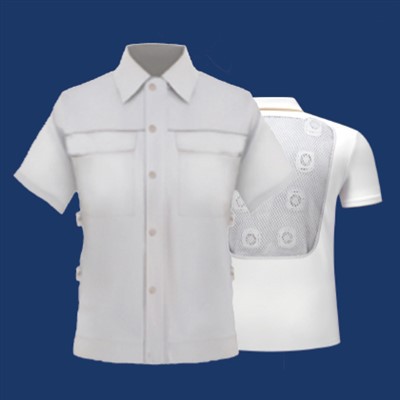
Reach out to our team to discuss your cooling vest requirements, learn more about our adjustable strap systems, and request a sample if you’d like to test the fit and durability for yourself. We’re here to help you find a cooling vest that works as hard as your users do.
Handheld Cooling Fan References
Journal of Occupational and Environmental Hygiene, Vol. 15, 2018, pp. 452-461.
National Institute for Occupational Safety and Health (NIOSH) Heat Stress Prevention Guidelines, 2021.
International Journal of Sports Physiology and Performance, Vol. 16, 2021, pp. 897-904.
Qiyi Science and Technology Industrial Co., Ltd.
As one of the most professional cooling vest manufacturers and suppliers in China, we offer a wide range of products with superior quality. Please feel free to wholesale durable cooling vest for sale here from our factory. We also accept customized orders.
Address: 8th and 9th floors, Building 17, No.128 Changning Road, Nanhu District, Jiaxing City, Zhejiang Province.
E-mail: 1076613238@qq.com
WebSite: https://www.qy-coolingvest.com/
